
- Warner Bors. DiscoveryDesigning the path to greenlight.
⎯ Definition
Greenlight /ˈɡriːn.laɪt/ noun
The formal approval process through which a film is authorized to move into production, based on an evaluation of its creative potential, financial viability, strategic alignment, and resource requirements.
⎯ At a glance
Designing financial decisions around AI.
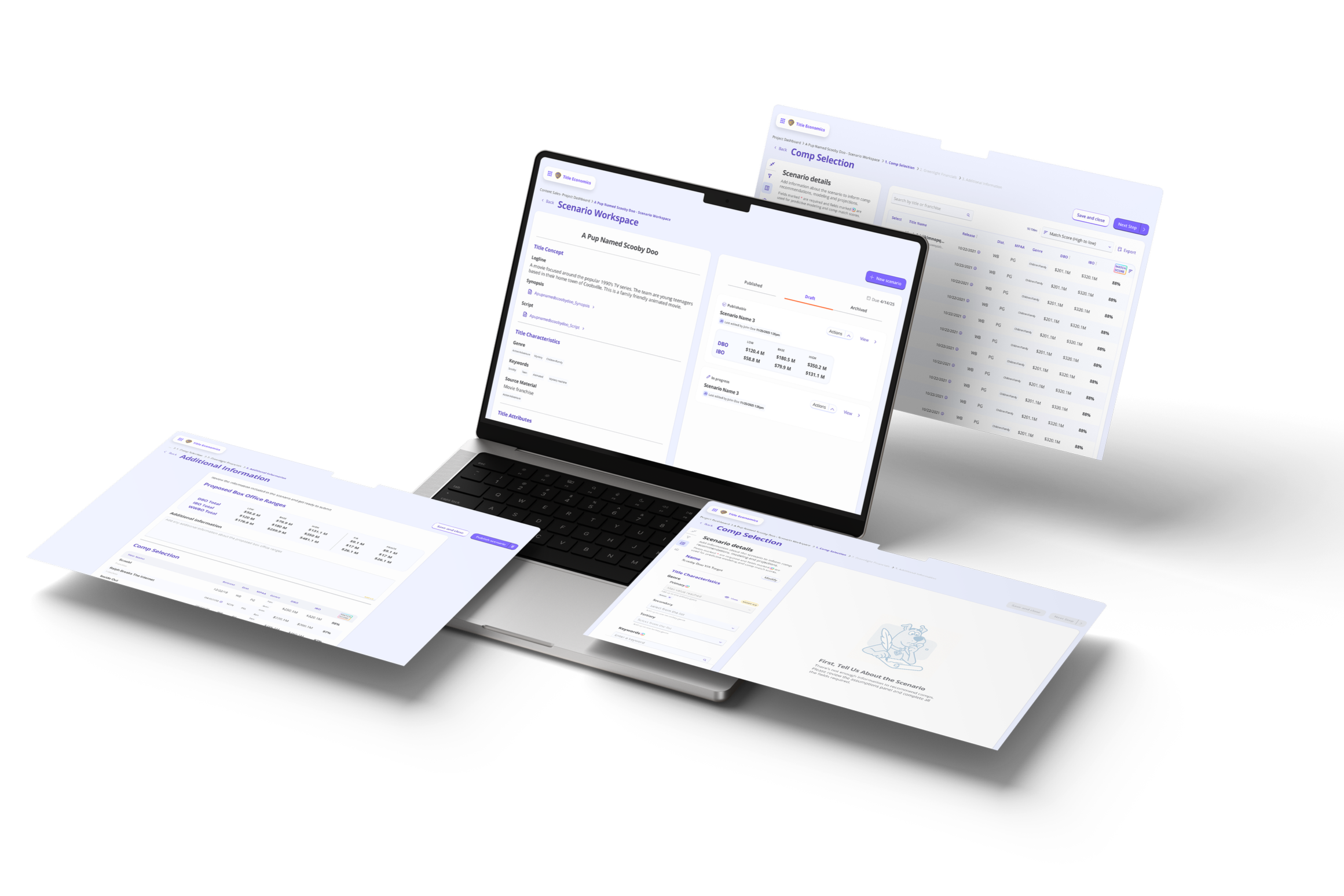
At Warner Bros. Discovery, I helped design Title Economics, an AI-assisted financial platform built to support film investment decisions.
The vision was to connect five business units in one workspace, bringing together financial projections, AI-powered recommendations, and shared insights as each film moved from development toward release.
⎯ The challenge
Making complexity work together.
Title Economics had to bring together different financial workflows while adapting to an AI system that was evolving throughout the project.
3 challenges shaped our approach:
01 / BUSINESS WORKFLOWS5 teams, 5 ways of working
Each business unit relied on different data, financial assumptions, and workflows. Information often moved between teams through Excel files shared by email.
We needed to bring these processes into one experience without losing what made each team's work different.
02 / EVOLVING AIDesigning around an AI that kept evolving
The predictive models were evolving almost every week, introducing new data, capabilities, and increasingly sophisticated forecasts.
We had to adapt the experience as the technology changed, helping users understand what influenced the predictions and make informed decisions without losing control.
03 / DATA PRIVACYSharing data without compromising privacy
Each business unit needed its own workspace, with sensitive financial information kept private.
The challenge was to make collaboration possible while giving Finance administrators control over which results could be shared.
⎯ My role
Lead Product Designer
My role covered the full product design process, from understanding financial workflows and shaping interactions to working closely with Data Science and Engineering throughout development.
I worked alongside another Product Designer, sharing the design work and challenging each other's decisions.
01
02
03
04
05
Product discovery & workflow design
Worked with Finance stakeholders to understand existing processes, identify differences between business units, and rethink parts of the user journey.
AI interaction design
Collaborated with Data Scientists to understand evolving predictive models and adapt the interface as new data and capabilities became available.
Prototyping & validation
Designed and refined complex financial workflows, built interactive prototypes, and tested experiences with users and stakeholders.
Design systems & accessibility
Helped migrate Title Economics toward a shared, token-based component library, working with Engineering on prioritization, accessibility, and component reviews.
Engineering collaboration & delivery
Contributed to Jira tickets, backlog refinement, Agile reviews, demos, developer handoffs, and design QA.
⎯ The result
What we made possible.
01 / SHARED WORKFLOWSA clearer way to work together
A shared experience connecting five business units, while respecting their different workflows, financial inputs, and confidentiality requirements.
02 / HUMAN JUDGMENTAI predictions people can question
An experience designed to make film recommendations and financial projections easier to understand, with room for users to apply their own judgment.
Details on the project
03 / DESIGN CONSISTENCYA more consistent product experience
A move toward shared design tokens and components, with accessibility and Engineering collaboration built into the process.


The story behind the product
Here are the decisions and discoveries
that changed the work.
⎯ 01 / Who I designed for
The people behind the greenlight decision.
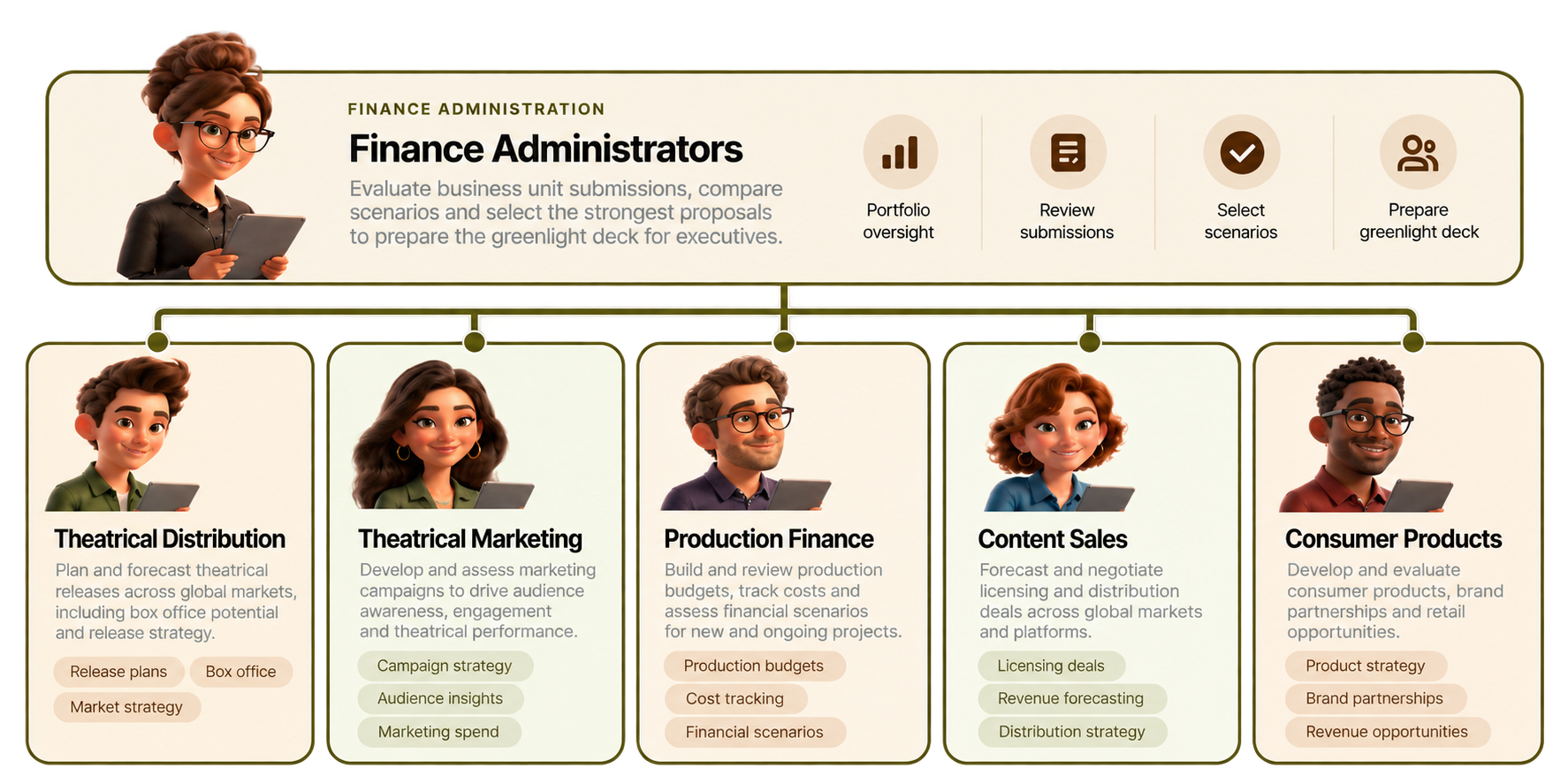
I designed for roughly 12 user across 5 Business Units and Finance administration.
The Business Units contributed their own data, assumptions, and scenarios. Finance managed access, reviewed their proposals, and prepared the information for greenlight discussions.
Existing Workflow & User Pain Points
Financial planning at Warner Bros. Discovery was still rooted in long-established, largely paper-based processes. Despite the introduction of digital tools over the years, many traditional practices remained part of everyday work.
Understanding this legacy revealed 3 major pain points for users:
The main challenge in user research and design validation was finding time with the people we were designing for. These were executives involved in major financial decisions, with limited availability for interviews, usability testing, or frequent design reviews.
I worked with a small group of volunteers, keeping sessions short and focused on specific questions to make the most of their time.
These sessions often brought together a large part of the project team, including Data Science, Engineering, and program leadership. I led the conversations, but everyone was encouraged to ask questions and hear directly from users. They became valuable moments of shared understanding, not just research sessions.
Despite their busy schedules, the executives were genuinely enthusiastic about contributing and improving the way their teams worked.
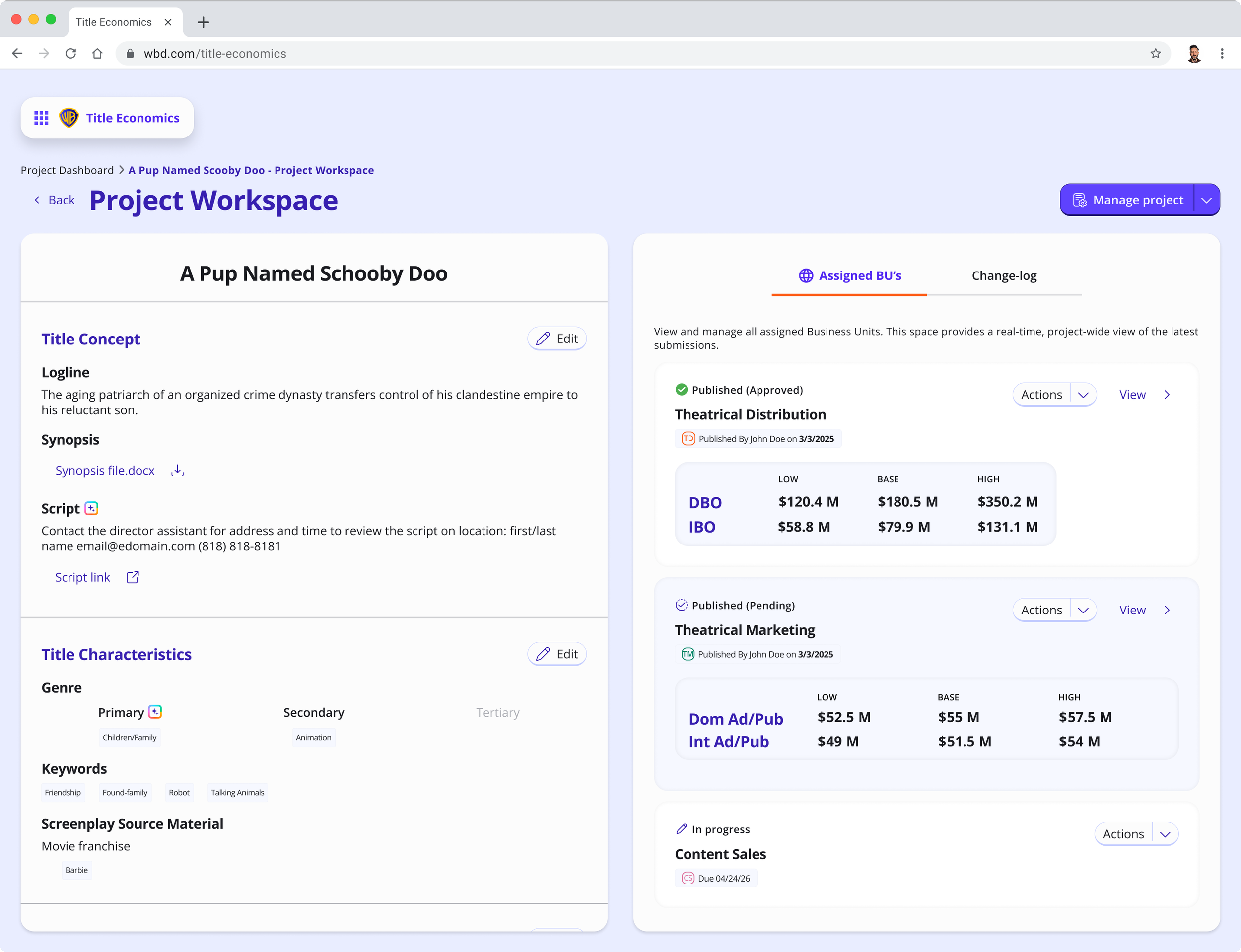
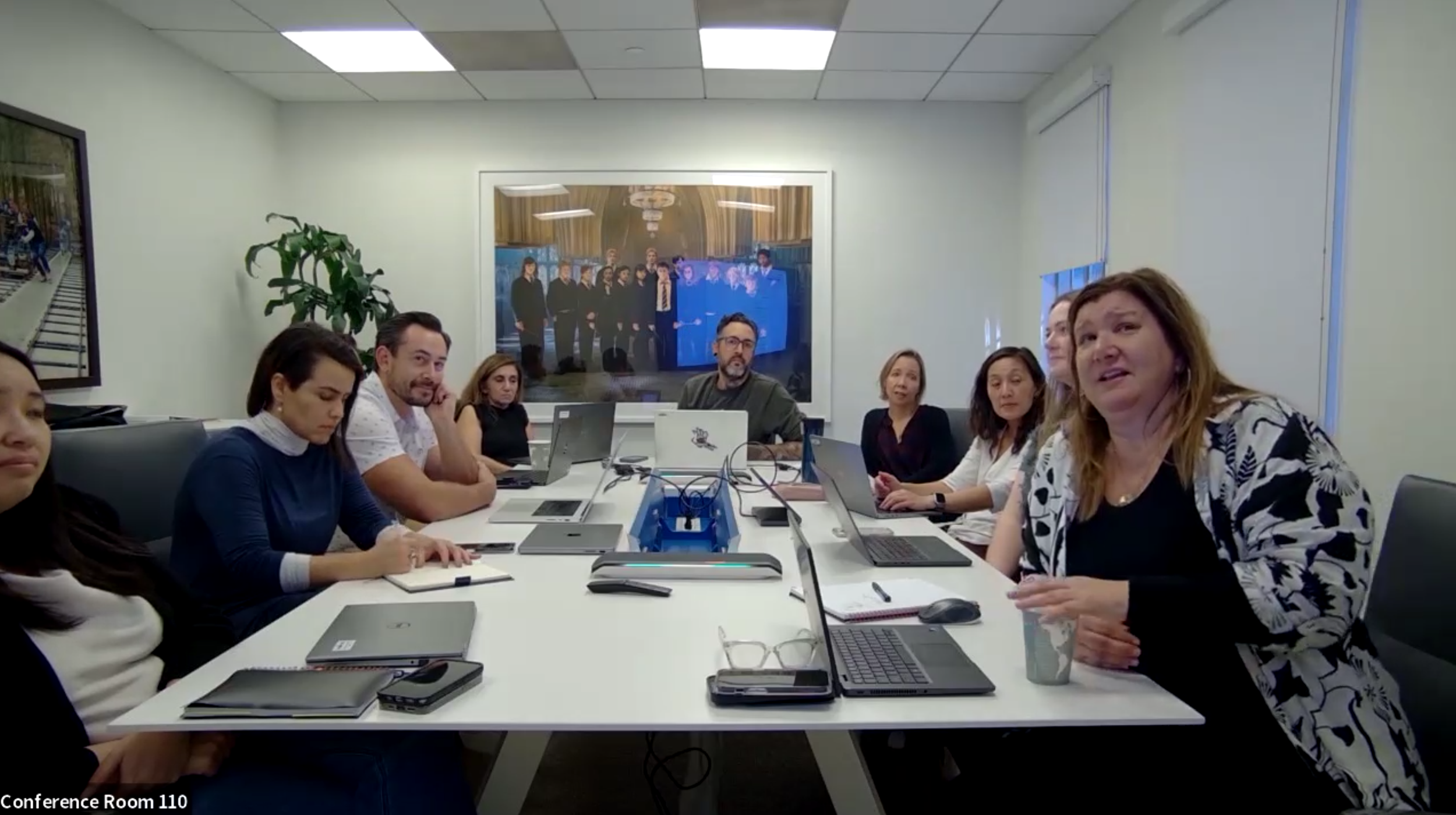
Reviewing product screens with a Finance executive.
USER RESEARCH WITH BUSY EXECUTIVES

Siloed workflows
Each business unit followed its own processes, used different data sources, and even developed its own tools, with little coordination or alignment across teams.
Excel by email
Important financial files were copied, updated, emailed, and sometimes printed. Multiple versions made it difficult to identify the latest figures and avoid mistakes.

No shared view
With limited visibility into other teams' work and decisions, misunderstandings could go unnoticed, important information could be missed, and valuable time was lost.
⎯ 02 / User journeys
Designing Connected Journeys
My goal was to make both journeys simpler and more intuitive without changing how the teams actually worked.
Business Units needed to build their own scenarios, select comparable films, review financial projections, and explain their decisions. Finance administrators needed to coordinate those contributions, review submissions, and prepare the information for greenlight discussions.
Keep the familiar workflow
I preserved the way business units built financial scenarios, making the steps clearer and easier to navigate.
Bring AI into the existing journey
Rather than creating a separate AI experience, we integrated predictions and recommendations directly where users needed them.
Make collaboration feel natural
I worked on connecting the two journeys through submissions, approvals, and shared results, while keeping sensitive business unit data private.
2 CONNECTED USER JOURNEYS
These design decisions guided how we refined the 2 user journeys. Business Units and Finance Administrators had different responsibilities, so each needed its own workflow.
The key was to make the handoffs between them clear and intuitive, from assigning projects to submitting scenarios and reviewing the results.
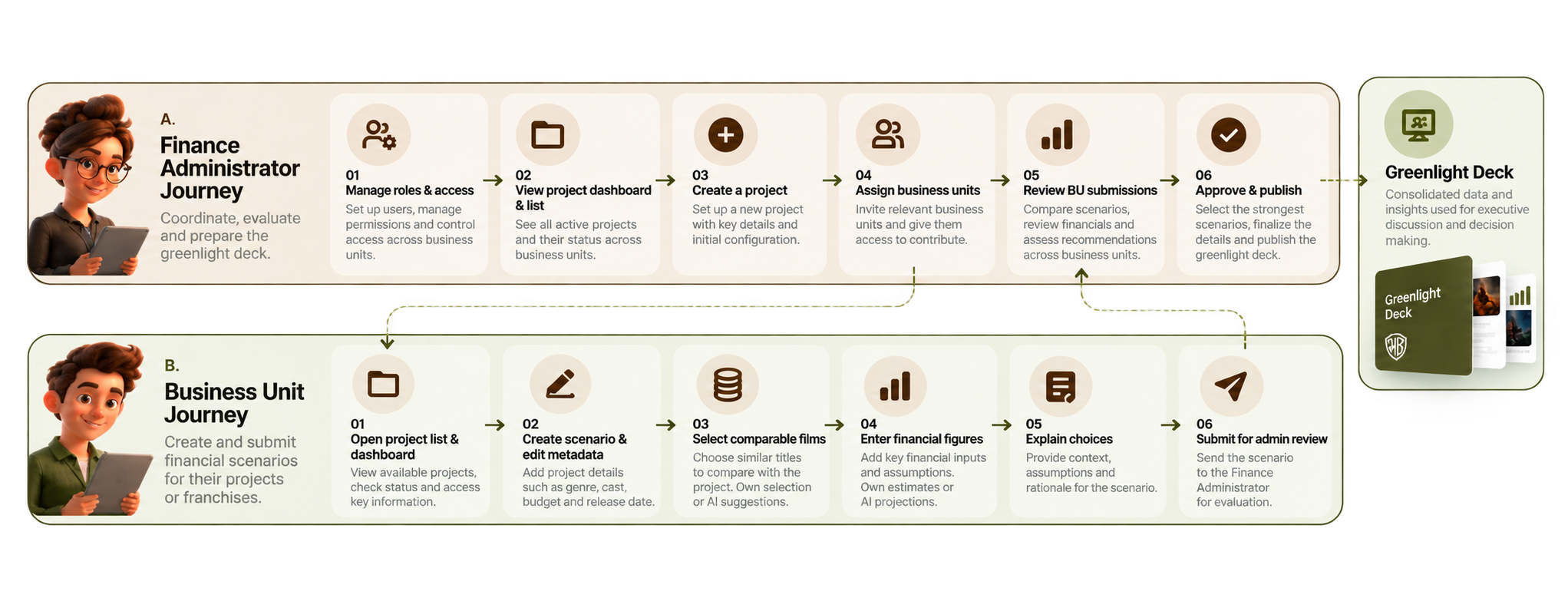
BUSINESS UNIT WORKFLOW IN ACTION
Video 02 / Comp Selection & Financial Projections
The AI models recommend comparable films based on the scenario's characteristics, using match scores to help users evaluate potential similarities and performance.
Users can follow these recommendations or select films themselves. Their choices then inform financial projections, while leaving room for their own estimates and expertise.
Video 01 / Scenario Creation
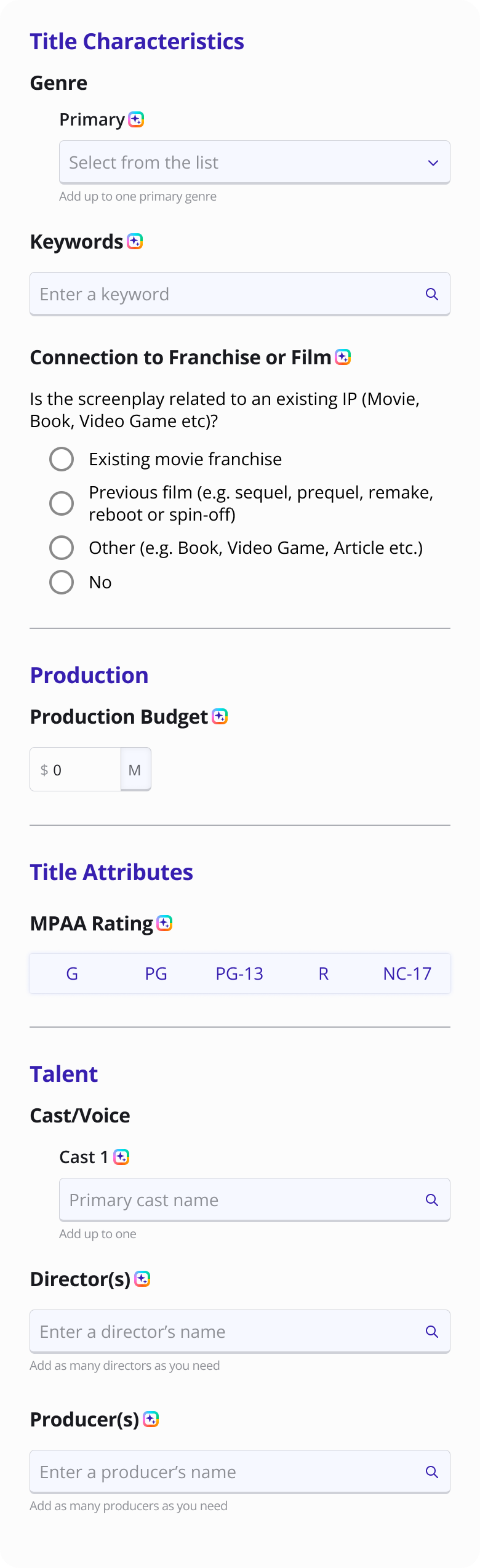
Business Unit users start with project metadata provided by Finance administrators. They can keep the original assumptions or create alternative scenarios by adjusting details such as genre, cast, and keywords.
Each scenario allows them to explore a different direction before selecting comparable films.
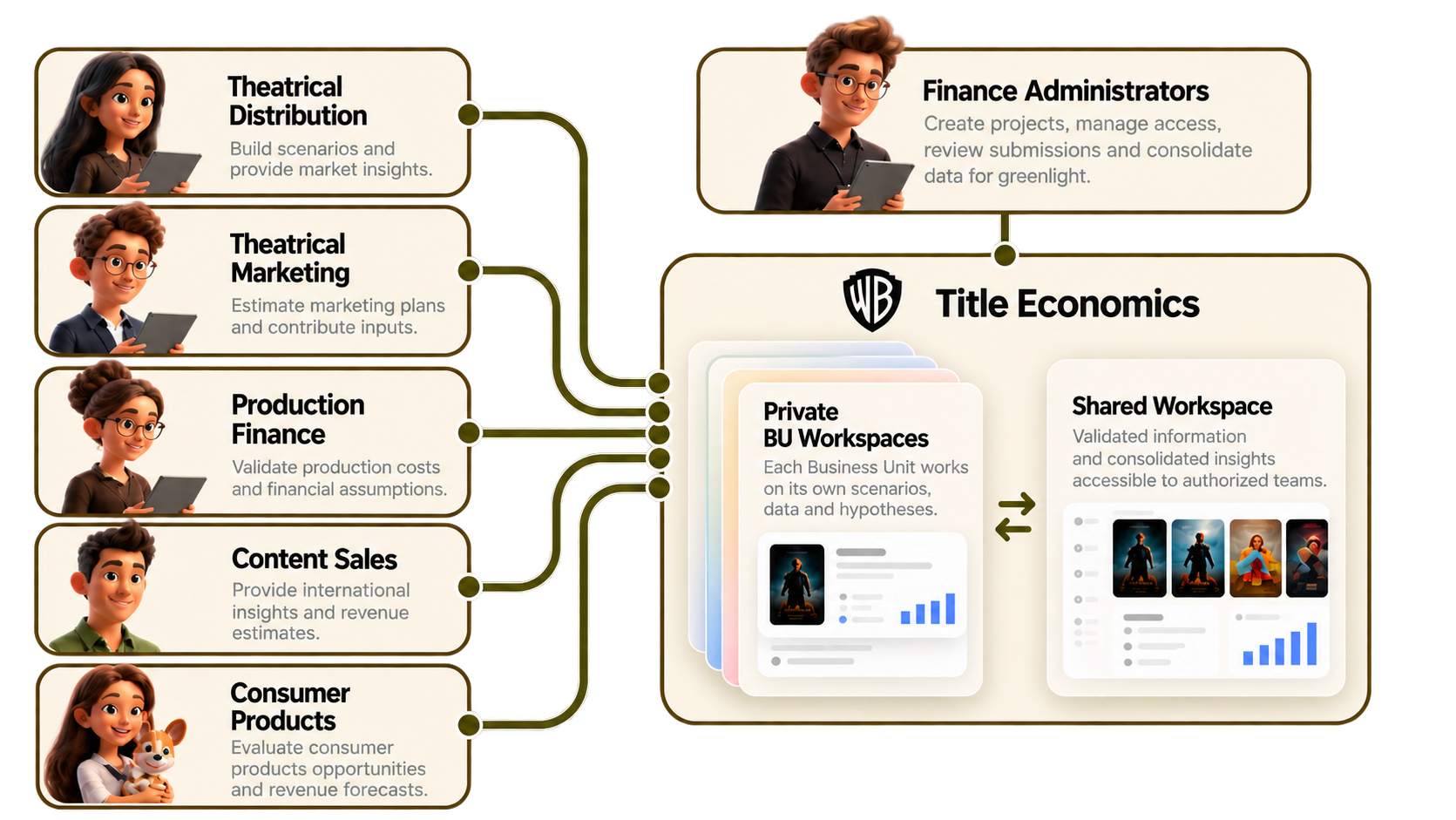
Title Economics was designed to bring 5 Business Units and Finance administrators into one connected workflow. Each team could develop financial scenarios in its own private workspace, then share selected information with Finance for review and greenlight preparation.
My role was to translate this structure into clear, intuitive user journeys that respected how each team worked.
💡
Main decisions that shaped the design
The challenge was not to reinvent the financial process. It was to make each step clearer, bring in AI where it helped, and connect the teams without exposing private work.
HOW TITLE ECONOMICS CONNECTS THE TEAMS
⎯ 03 / AI interaction design
Making AI understandable without giving up control.
AI was already a sensitive subject in Hollywood. During the 2023 writers' strike, concerns about generative AI and writers' rights became part of a much bigger industry debate. The people I worked with had real concerns about trusting AI, while the pressure to innovate and keep up with the technology was growing.
We needed some clear rules for how AI would fit into the decisions they were already making.
Designing alongside Data Science
Working closely with Data Science meant constantly adapting to changes in the predictive models. New data, capabilities, and requirements could challenge design decisions from one week to the next.
The shift from one predictive model to two was a good example. It pushed me to rethink how information was presented and how users interacted with predictions. Through weekly discussions with Data Science, I continuously refined the experience while keeping it clear, consistent, and familiar to users.
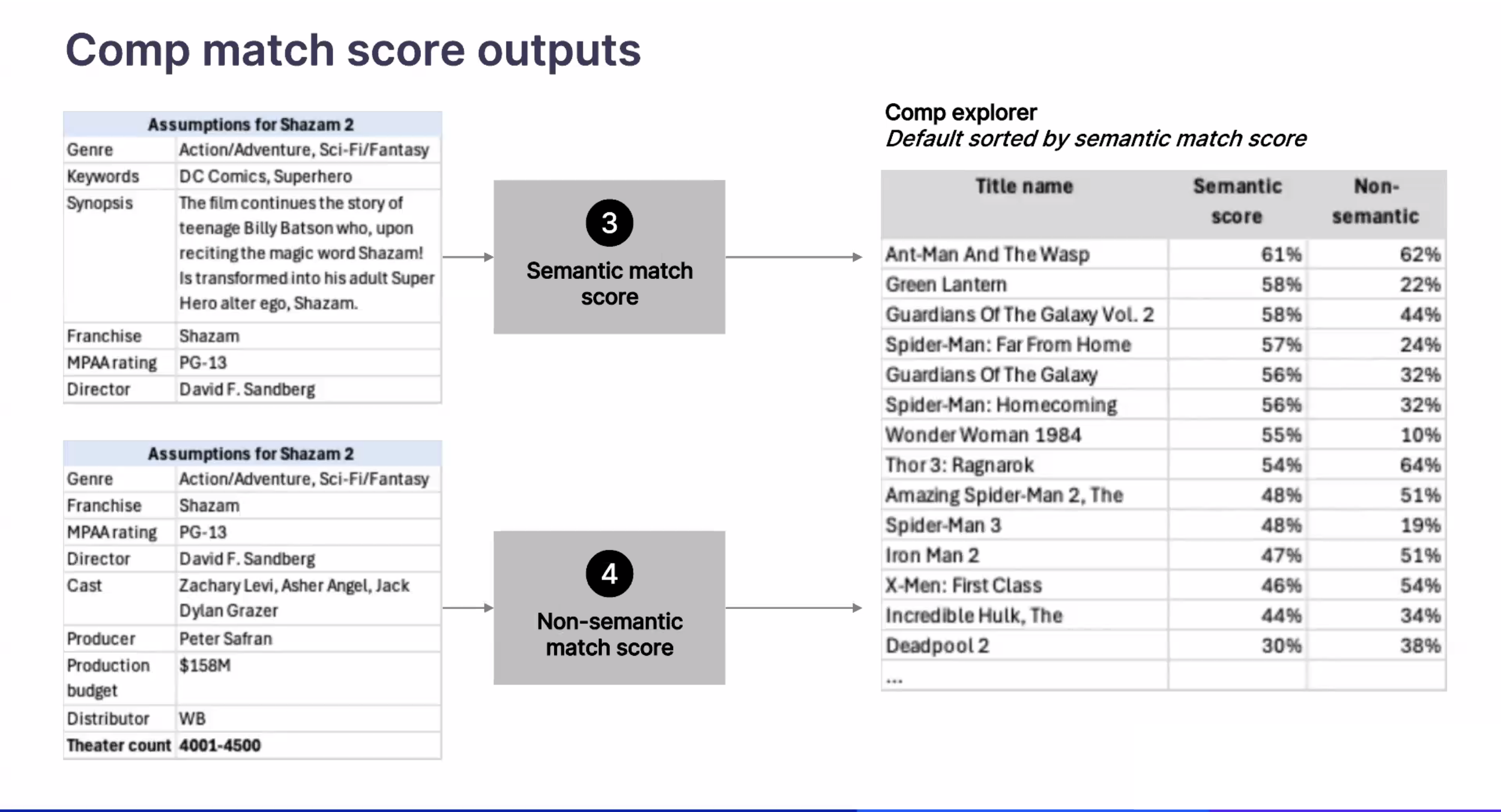
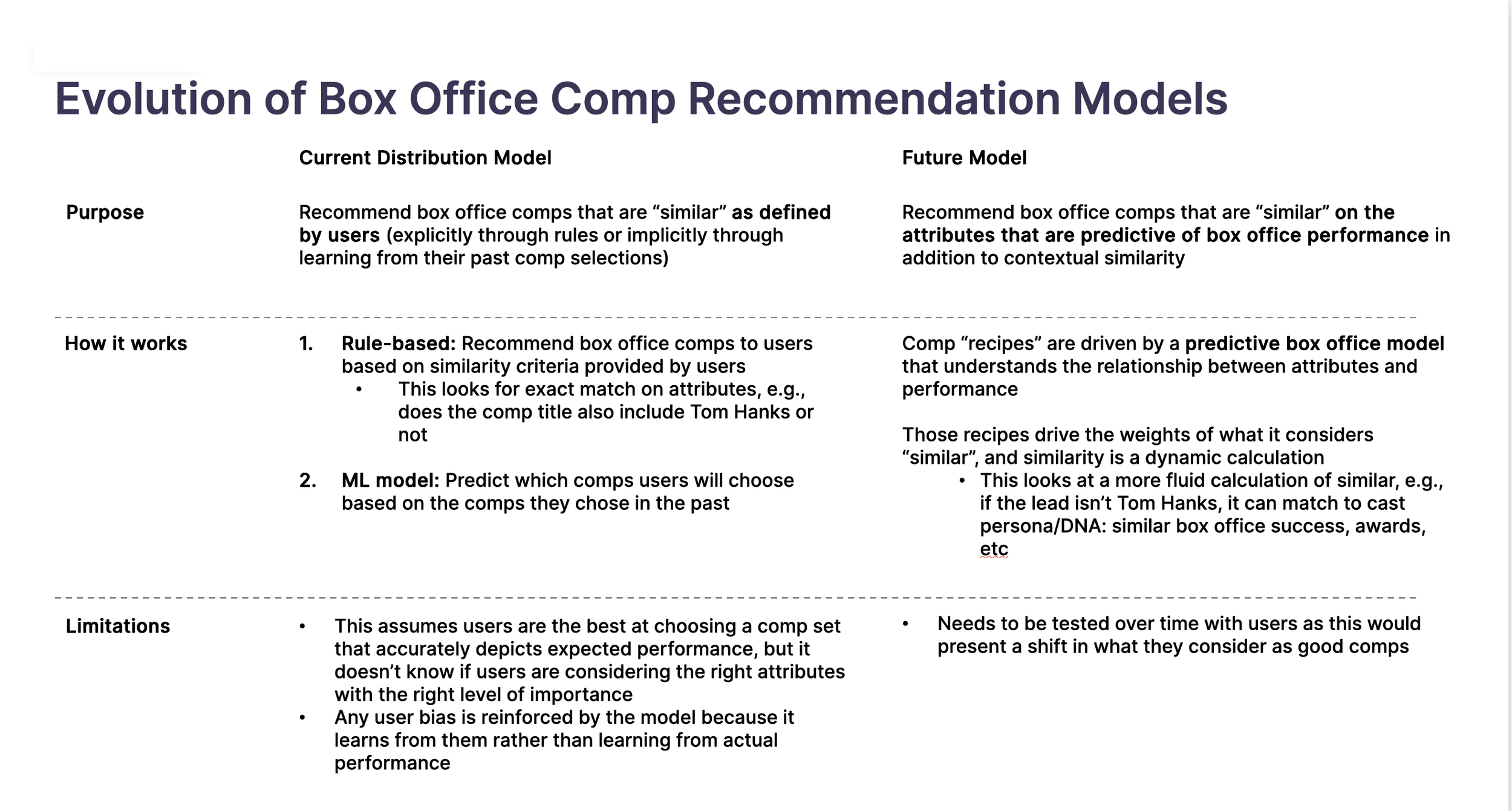
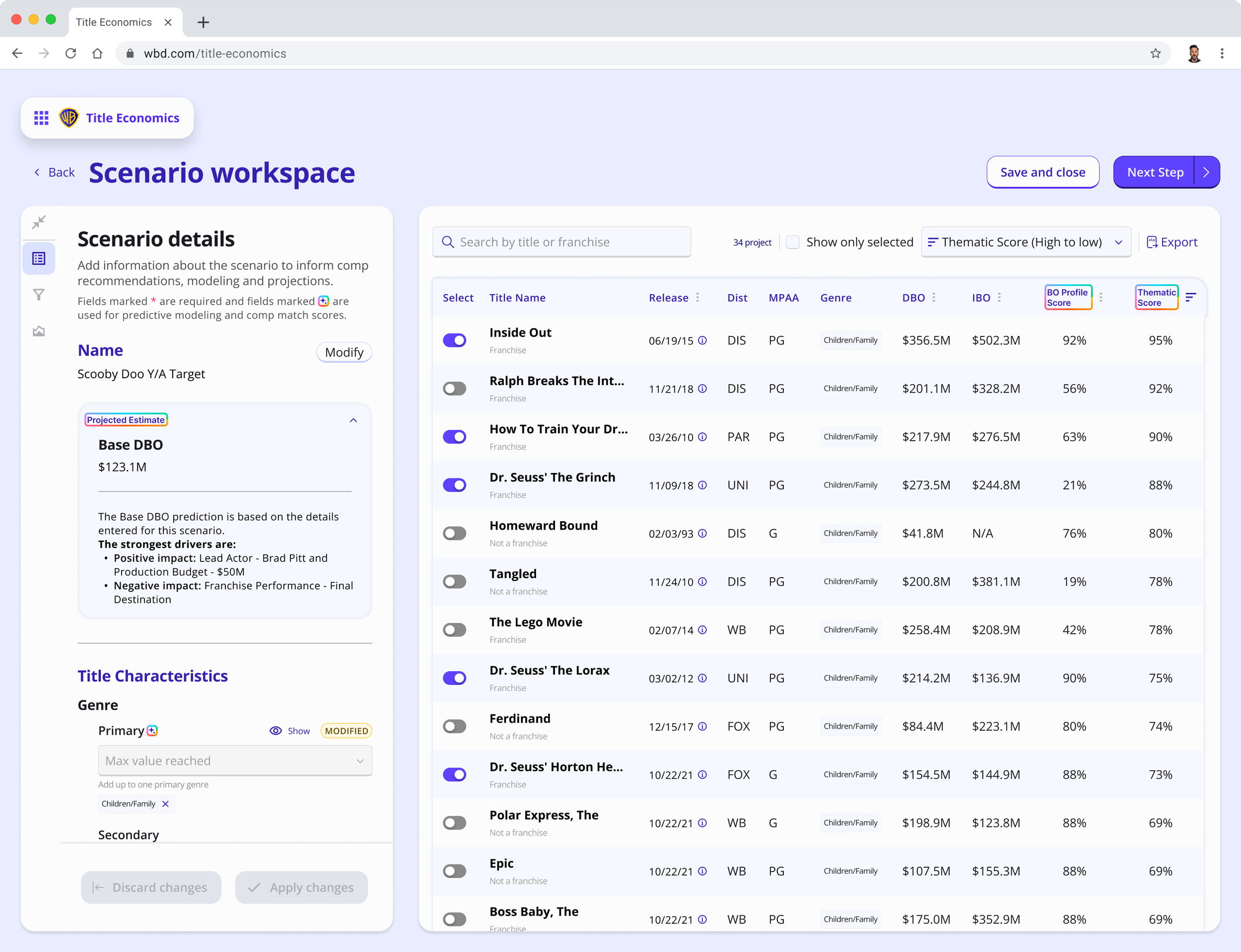
key moment #1 - selecting comparable films
Selecting comparable films is a critical step, as it lays the foundation for financial projections. Traditionally, these choices relied heavily on industry experience and intuition.
The 2 predictive models introduced a more granular approach, providing 2 distinct match scores: one based on similarities in story and content, the other on factors linked to box-office performance.
My challenge was to make these insights clear and easy to interpret, giving users more objective information to support their choices without replacing their own judgment.
01 / SEMANTIC MATCH
Do these films feel similar?
Looks at story, genre, keywords, director, and rating to assess content similarity.
02 / NON-SEMANTIC MATCH
Would they perform alike?
Uses release details, franchise, cast, distributor, runtime, and rating to assess box-office similarity.
💡
Make AI recognizable
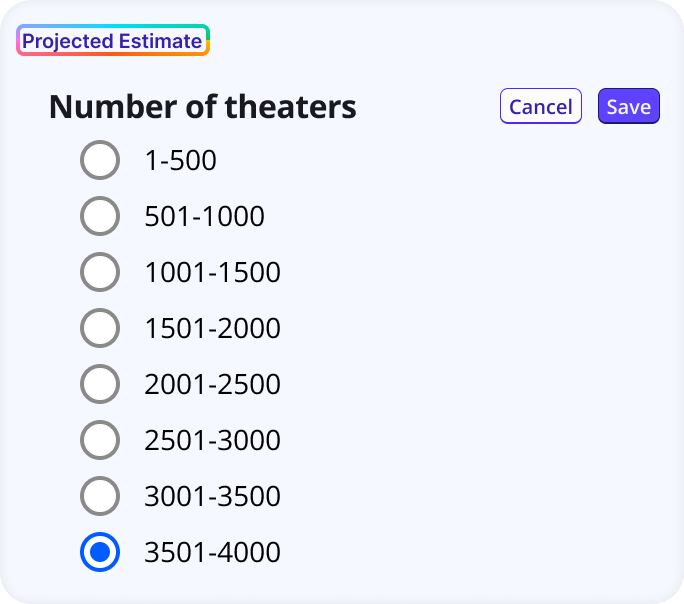
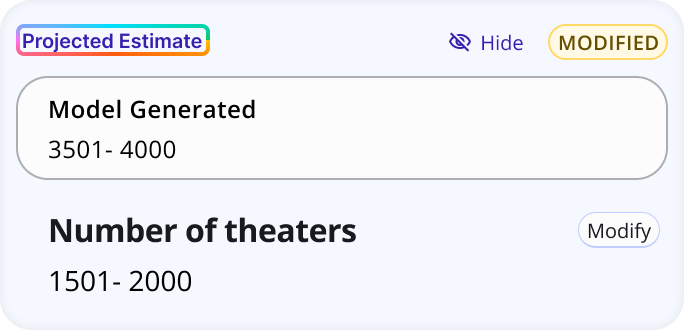
I created a distinct visual identity for model-generated suggestions, making it easy to distinguish AI recommendations from information entered by users.
Build trust through context
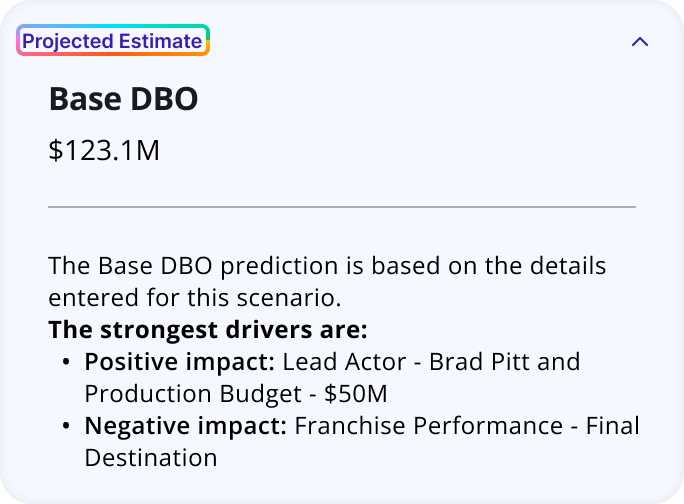
I presented recommendations and predictions using familiar film details, match scores, and financial assumptions, rather than raw model data or technical jargon.
Keep humans in control
Users could select their own comparable films and manually enter financial estimates. AI provided suggestions, but users remained responsible for every decision.
key moment #2 - financial projections
Once comparable films were selected, the next step was to turn those choices into financial projections. Each Business Unit needed to evaluate the film's potential from its own perspective, using different financial assumptions and performance indicators.
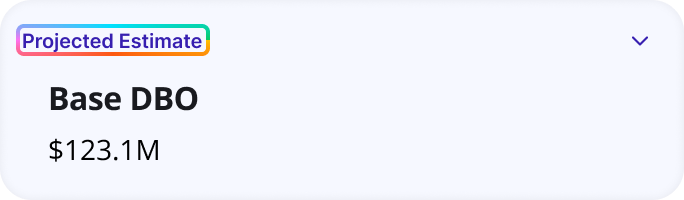
The AI model used the selected comparables and available data to generate estimates. As more relevant information became available, these projections could be refined.
My challenge was to make these forecasts understandable and actionable, while giving users the freedom to question predictions, adjust figures, and build scenarios based on their own expertise.
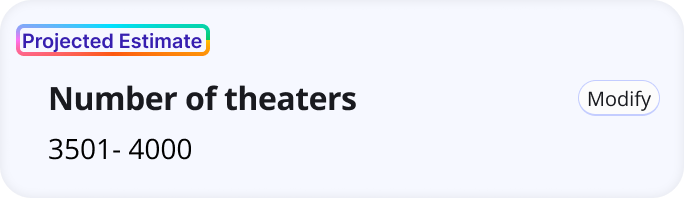
Those decisions shaped 2 key moments in the journey: selecting comparable films and building a financial range. In both, the model offered a starting point, not a final answer.
MAin decisions that shaped the design
The models could evolve, but these design principles needed to remain consistent.
⎯ 04 / From design to implementation
Designing ahead, building together.
Our backlog followed the user journey, and our design work followed the backlog. It gave every sprint a clear connection to what users needed next.
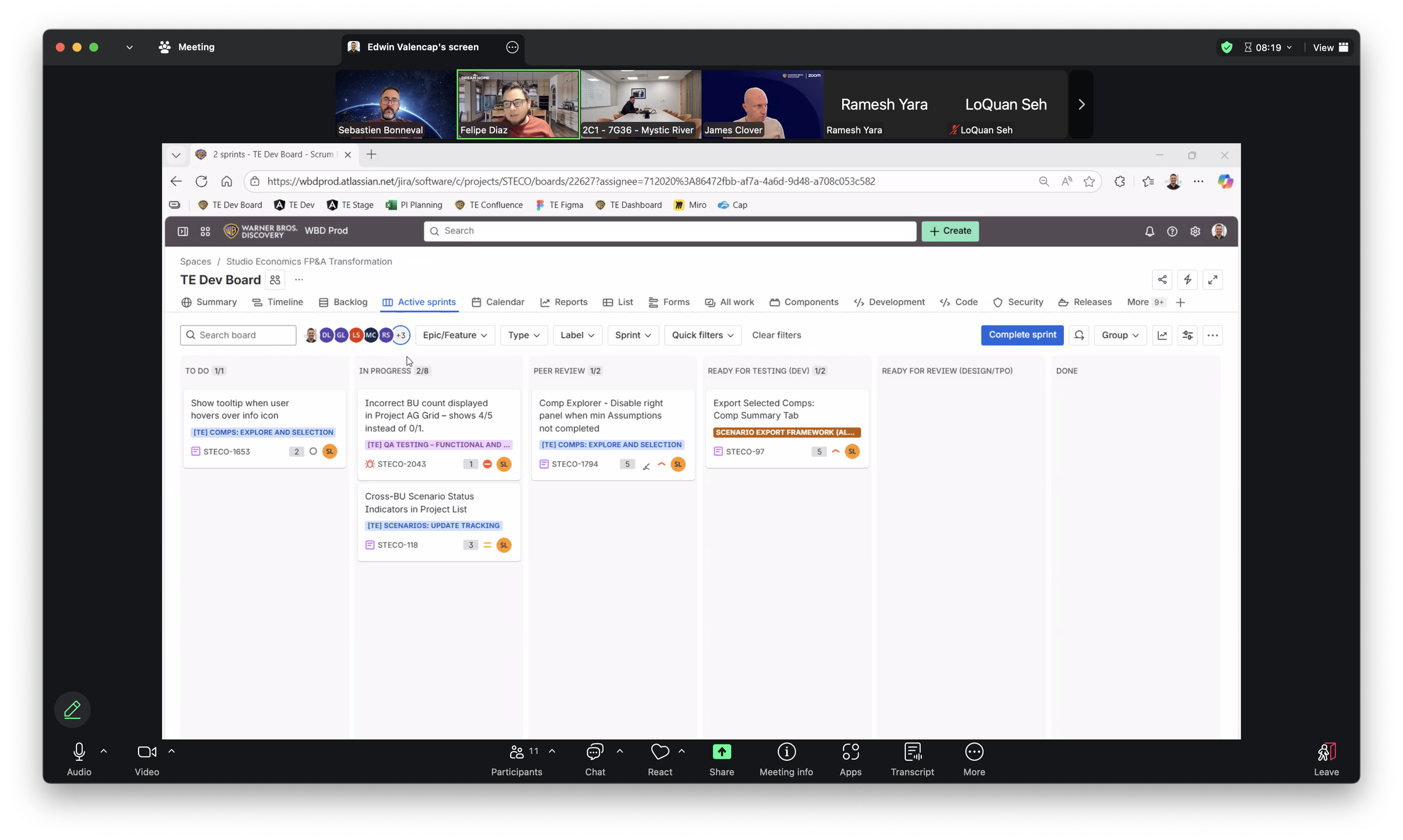
Review Jira tickets and backlog, frame the needs together
At the end of each sprint, we prepared detailed Figma handoffs and refined the next Jira tickets together. But handoff was never just a delivery. We worked through questions one-on-one with developers, demos, and sprint reviews, and stayed involved through design QA.
MAin decisions that shaped the design
work in progress
Making handoff an ongoing conversation
While Engineering built the current sprint, we stayed one sprint ahead. We focused our interviews, prototypes, and quick usability checks on the next part of the journey, using what we learned to shape the work coming up.
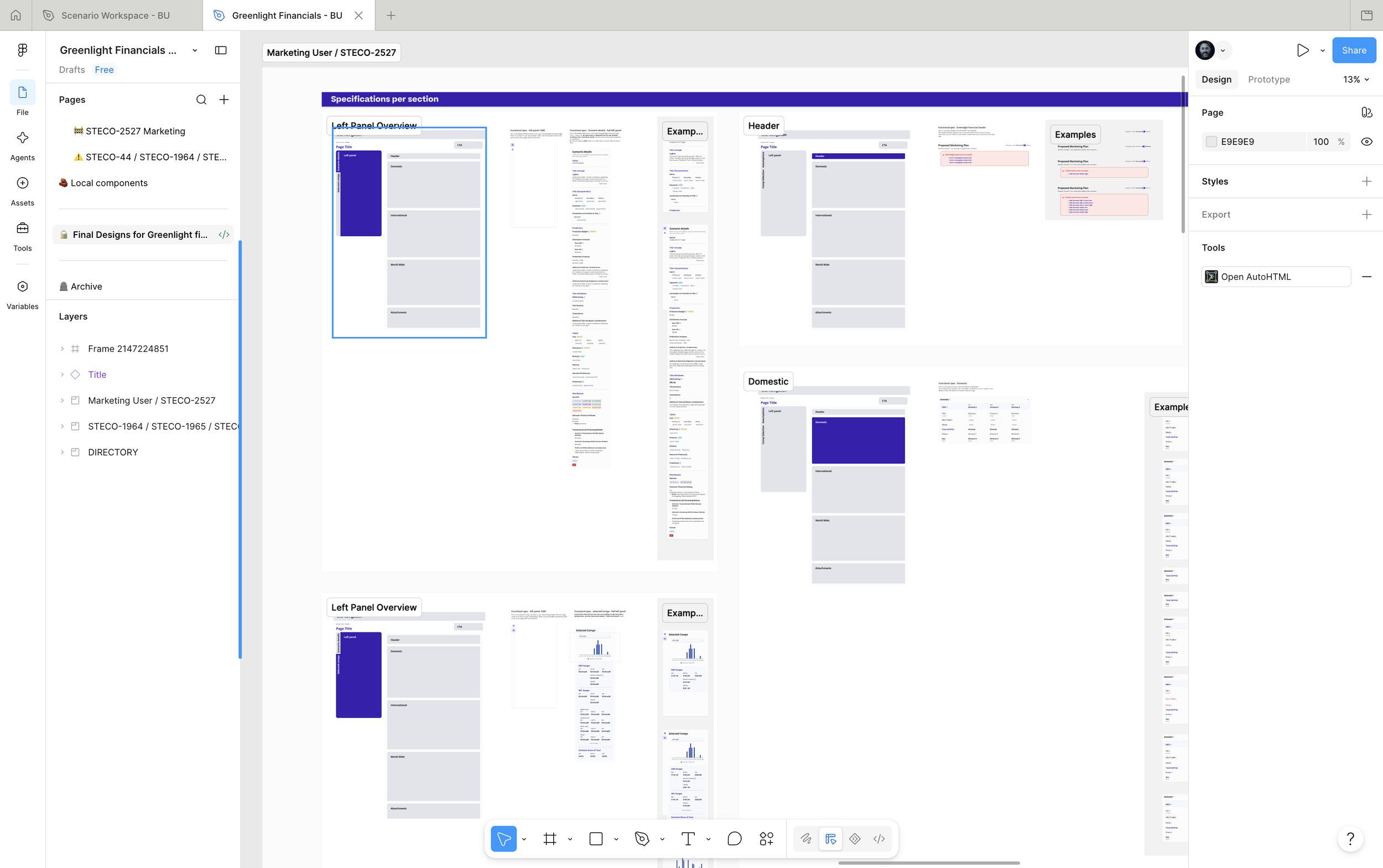
Detailed Figma handoffs, explain choice, provide all variations, edge cases and error messages.
The best part was the shared understanding. Engineers could see the user problem behind each feature, and feedback from those users gave context to the decisions.
That way of working became an example for other product teams.